
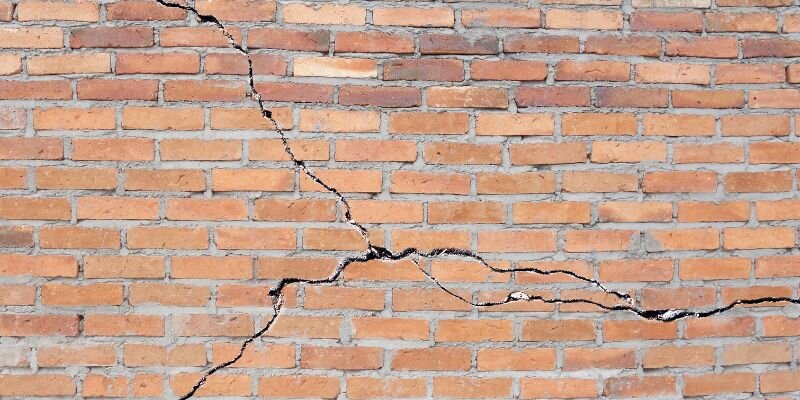
A crack running diagonally from the corner of a basement window. Doors that stick every single morning. A floor that stopped being level so gradually you barely noticed. These aren’t just quirks of an older Pennsylvania home. They’re the signals that a foundation problem is quietly shaping how your sale is going to go, and ignoring them won’t make buyers ignore them, either.
Selling a house with foundation issues in Pennsylvania is doable. Plenty of sellers have done it. The path you choose, though, determines whether you walk away with a fair outcome or spend months spinning your wheels.
Your Real Options for Selling a Home with Foundation Problems
This binary is a trap. Sellers with a compromised foundation assume they’re stuck choosing between two options: spend the money to fix it or take a huge price hit. This framing omits a third path that often makes the most financial sense, and I’ve watched sellers walk away with more money by taking it.
Pennsylvania’s median home sale price reached $318,867 in May 2026, up 5.6% compared to the prior year. This is a market with real value at stake. Sellers who understand their options can protect more of it, which means going in informed is worth the time it takes.
The Mitchell family in Lansdowne, just west of Philadelphia, came to us on a Tuesday in the middle of a divorce. They needed the house sold, the assets split, and their lives to move forward. The property had a bowing block wall in the basement, and neither of them had the appetite or the capital to manage a repair project mid-litigation. We bought the house as-is and closed on their timeline, and they walked away without a contractor ever setting foot inside. The as-is sale path was actually built for exactly this scenario.
Your three real options are: repair and list on the traditional market, list as-is with a real estate agent and price accordingly, or sell directly to a cash buyer who already accounts for the foundation condition in their offer. If you’re considering a direct sale, learning how we buy houses can help you understand what to expect from the process before making a decision. Each one has a different cost structure, timeline, and risk profile. None is automatically correct. The right answer depends on how much equity you have, how much time you can afford to spend, and how much risk you’re willing to carry if a financed buyer’s lender or inspector kills the sale.
Signs of Foundation Damage That Buyers and Sellers Should Know
A seller in Allentown once told me they’d lived with a stair-step crack in their brick exterior for so long it had become wallpaper. Two weeks before closing, the buyer’s inspector flagged it as active movement, and the sale collapsed. This is the pattern that plays out over and over.
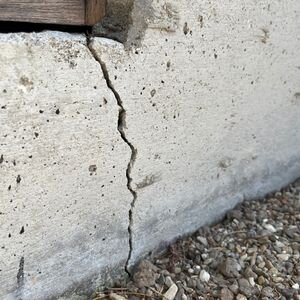
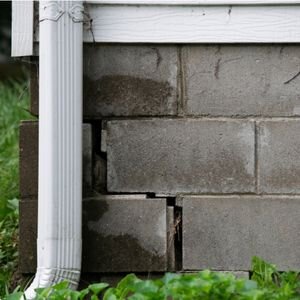
Buyers’ inspectors are trained to find exactly what you’ve stopped noticing. Diagonal cracks running from window and door corners, gaps where the foundation wall meets the floor, water stains ringing the base of the basement walls, and floors that roll noticeably from one side of a room to the other are all flags that will show up in an inspection report. Bowing or bulging foundation walls are the most alarming (block construction shows these issues quickly), especially in older Philadelphia row homes and mid-century Pittsburgh-area ranches.
Crawl space issues are easy to overlook because most sellers never go under there. Sagging floor joists, wood rot where moisture has been pooling, and cracked or shifted piers all point to the same core problem. A structural engineer, not just a home inspector, can give you a written assessment that actually tells you the severity. The report runs a few hundred dollars and is worth every cent because it’s the document that anchors every conversation you’ll have about price or repairs.
Do you know what’s actually under your house right now? If you haven’t looked, a buyer’s inspector will look for you. Better to find out first.
What Foundation Problems Actually Do to Your Home’s Value in Pennsylvania
For years, I thought foundation issues simply discounted a home by whatever the repair cost happened to be. Watching several sales fall apart taught me that’s not how buyers calculate it, and I finally understood the real math.
Buyers don’t just price in the repair. They price in the risk, uncertainty, and disruption of managing a contractor-heavy project in a home they don’t yet own. A knowledgeable investor can manage a $5,000 repair, but a nervous first-time buyer may see it kill $30,000 or more in perceived value. Serious structural work, like piering a settling foundation, can run $15,000 to $50,000 or more, depending on how many piers are needed and how much access the crew has. Across Pennsylvania, average foundation repair costs run around $5,600, though the range spans from a few hundred dollars up to $9,000 for more involved projects. But that average buries the outliers, and those outliers are what appraisers and mortgage lenders focus on (sometimes obsessively, in my experience).
FHA loans add another layer. FHA loans have property condition requirements, and a lender reviewing an appraisal flagged for foundation movement will almost certainly decline to fund the purchase. This eliminates a meaningful chunk of the buyer pool in cities like Reading and Harrisburg, where FHA financing is common. Conventional buyers are more flexible, but even they’ll push for price credits or insist on repairs as a condition of closing. Cash buyers and investors are the only groups that can take the property as-is without a lender imposing additional requirements.
A foundation problem also complicates appraisals. Appraisers are required to note structural concerns, and such notations can trigger mandatory repair conditions imposed by the lender before a mortgage will fund.
Pennsylvania Disclosure Laws and Your Legal Responsibilities as a Seller
Many sellers in Pennsylvania sometimes believe that selling a property “as-is” means the foundation issue doesn’t need to be disclosed. Courts in this state have consistently shown otherwise.
Pennsylvania’s Seller Disclosure Law requires sellers to complete a disclosure statement covering structural issues, water intrusion, and defects known at the time of sale. The phrase “caveat emptor” (buyer beware) still has some relevance in Pennsylvania real estate, but it doesn’t shield a seller who knew about a problem and remained silent. Concealment is where sellers walk into litigation.
Failing to disclose a known foundation issue can expose you to lawsuits long after closing. A buyer who discovers the problem six months in and can show that you were aware of it has a strong legal claim. The better path is full transparency from the start. Disclose what you know, have the engineer’s report ready, and let buyers make an informed decision. Transparency actually protects you and, in my experience, keeps a sale from falling apart at the worst possible moment because the issue was already priced into the negotiation from day one.
The Pennsylvania Real Estate Commission maintains the disclosure requirements sellers must follow. Read them carefully before you list, or have a real estate attorney walk you through them. A few hundred dollars in legal fees is far less than the cost of a post-closing lawsuit, and I’d rather pay an attorney upfront than defend a claim after the sale closes.
Should You Repair the Foundation Before Selling or Sell As-is?
Sit down at the kitchen table with me for a minute, because this stage is where I see sellers make the most expensive mistakes.
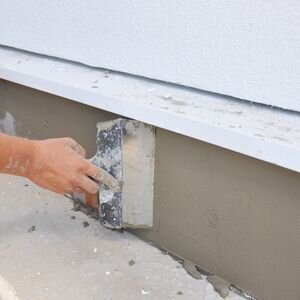
Repairing before listing sounds like the obviously correct move. Fix the problem and sell at full market value; everyone wins. Except the math rarely works out that clean. Contractor pricing data from 2024 through 2025 puts the median foundation repair cost at around $7,500, with further increases expected as labor and material costs rise. Spend $7,500 to $15,000 on structural work, and you still have to manage agent commissions, closing costs, and the carrying costs of keeping the house while repairs happen and the listing sits. Months of mortgage payments, utilities, and property taxes for a house you’re trying to leave add up fast, and in my experience, that timeline almost always runs longer than sellers expect.
Repair makes sense when the fix is minor, clearly defined, and backed by a transferable or lifetime warranty from the contractor. A documented lifetime warranty reassures buyers and satisfies lenders in a way that a bare repair without paperwork never will. Waterproofing systems with warranty coverage are similarly helpful because lenders often flag moisture issues, and the warranty gives the underwriter something concrete to work with.
Selling as-is makes sense when the repairs are large and uncertain, when you’re in a time-sensitive situation, or when the house has additional deferred maintenance that would compound the financial hit. For homeowners who don’t want to take on expensive structural repairs, we buy Pennsylvania homes in their current condition, making it easier to move forward without the delays of a traditional sale. Investors and cash buyers have seen every version of a struggling foundation. They’re not scared off. They price it in and move.
The tradeoff is price, not feasibility. An as-is sale to a cash buyer will reflect the property’s current condition. What sellers often miss is that after factoring in repair costs, agent fees, and holding time, the net from a cash sale is frequently closer to the net from a repaired traditional sale than people expect (carrying costs add up fast).
Why Cash Buyers Are Often the Best Option for Foundation-damaged Homes in Pennsylvania
A homeowner in Bethlehem reached out after her traditional listing sat for 4 months without an accepted offer. Every time a buyer got interested, the foundation disclosure scared off their lender. The garage had old oil drums stored in it from a previous owner, and the bowing wall in the basement corner had been there since before she bought the house (a structural engineer confirmed it hadn’t moved in years).
Cash buyers don’t bring a bank with them. No lender means no appraisal conditions, no FHA property requirements, and no underwriter pulling the plug at the last minute because the inspector’s report used the phrase “structural concern.” For sellers with foundation damage, that lender problem is the single greatest obstacle in the traditional market, and cash buyers eliminate it.
Pennsylvania homes spent a median of 36 days on the market in May 2026 under normal conditions. A house with disclosed foundation problems routinely sits two to three times longer while financed buyers cycle through and back out. Every extra month is another mortgage payment, another utility bill, and more stress. Cash buyers typically close in two to three weeks, letting a seller bleed carrying costs and stopping the drain far sooner than a conventional sale allows.
Nura Home Buyers works directly with Pennsylvania homeowners in situations exactly like these. They buy properties with foundation issues, structural concerns, and deferred maintenance without requiring repairs, staging, or listings, letting you skip the whole drawn-out prep process from start to finish. If you want a straightforward offer without the uncertainty of a traditional sale, they’re worth a conversation.
Investors who buy foundation-damaged properties are also not going to panic over the scope of the work. They’ve hired structural engineers, managed pier installations, and waterproofed basements across the region. That experience is what lets them make confident offers where conventional buyers hesitate, because they’ve already seen what the worst-case repair timeline actually looks like.
How to Get the Most Out of Selling a House with Foundation Problems in Pennsylvania
What’s the single thing that costs Pennsylvania sellers the most money in this situation?
Mispricing. Every time. Many sellers either price their homes as if the foundation issue doesn’t exist, which kills the sale when the inspection comes back, or they overcorrect and price their homes so far below market that they leave real money on the table. The answer is an engineer’s report and a clear picture of what comparable properties actually sold for in your area, whether that’s Norristown, Scranton, or somewhere in Chester County.
Get the structural engineer’s report before you accept any offers. That report lets you price with confidence and gives buyers, whether they’re cash investors or traditional buyers, the information they need to move forward without asking for a lengthy due diligence period. A defined problem is always less scary than an undefined one.
Caroline Reeves had been carrying two mortgages for nearly a year by the time we connected. Her late father’s rowhouse in Pottstown had a cracked poured-concrete foundation along the rear wall, and the back bedroom’s floor had a noticeable dip in one corner. She’d had two traditional sails fall apart at inspection. When she came in with the engineer’s report already in hand and a clear understanding of the repair’s cost, we could make a decision in days. That preparation shortened the process by weeks and alleviated her second mortgage payment, a cost sellers often underestimate when deciding whether to obtain the report first.
Price your property honestly to account for the foundation issue, gather your documentation, and be upfront in your marketing. If you’re located in western Pennsylvania, working with cash home buyers in Butler, PA can be a practical option when you want to avoid repair costs and sell on your own timeline. Sellers who try to hide the problem lose the sale at the worst possible moment. Sellers who put the disclosure and engineer’s report front and center attract the right buyers immediately (the ones who’ve already budgeted for repairs). Nura Home Buyers can give you a no-obligation offer if you want to skip the listing process entirely and see what a direct sale would look like for your specific property.
Frequently Asked Questions
Is It Hard to Sell a Home with Foundation Issues?
It depends on the buyer pool you’re targeting. Selling to a financed buyer on the traditional market can be genuinely difficult because mortgage lenders often won’t fund a loan on a home with flagged structural issues, which means the sale falls apart after inspections. Selling directly to a cash buyer or investor is a much smoother path, since there’s no lender in the transaction to raise objections based on the property’s condition.
How Much Less Should I Expect a Buyer to Offer on a House with Foundation Issues?
There’s no universal number, but buyers typically discount well beyond the actual repair cost because they’re pricing in risk, not just labor and materials. A repair that a contractor would quote at $8,000 might translate to a $20,000 or $30,000 reduction in what a nervous buyer is willing to pay. Having an engineer’s report and documented repair quotes narrows that gap, because defined problems are easier for buyers to price than unknown ones.
What Is the Hardest Month to Sell a House in Pennsylvania?
January and February are traditionally the slowest months in the Pennsylvania market. Fewer buyers are actively searching, inventory sits longer, and sellers have less negotiating leverage. If you’re facing a foundation issue and can time a traditional sale, spring listings in March through May tend to attract more buyer competition. That said, cash buyers purchase year-round, so seasonality matters much less if you’re selling directly.
What Is the Most Common Reason a Property Fails to Sell?
Pricing disconnected from condition is the top culprit, especially with foundation-damaged properties. A seller who lists at market rate without accounting for the structural issue will see interested buyers walk away after inspection, often repeatedly. The second most common reason is financing falling through after a lender’s appraiser flags the foundation, something that’s entirely avoidable by targeting cash buyers from the start.
If you’d like to discuss your options or request a no-obligation offer, contact us, and our team will be happy to help you evaluate the best path forward.
Helpful Pennsylvania Blog Articles
- Can You Sell a House with a Lien in Pennsylvania?
- Can You Sell a House With Asbestos in Pennsylvania?
- How to Do Sale by Owner in Pennsylvania
- How Does Selling a House with a Mortgage Work in Pennsylvania
- Can You Sell House with Tenants in Pennsylvania?
- Capital Gains Tax After Selling a Home in Pennsylvania
- How Long After an Appraisal Can You Close in Pennsylvania
- Selling a Home That Needs Repairs in Pennsylvania
- How to Do a Quit Claim Deed on a House in Pennsylvania
- How Much Does It Cost to Sell a House in Pennsylvania?
- Can a Jointly Owned Property Be Sold by One Owner in Pennsylvania
- How To Sell a House With Foundation Issues in Pennsylvania