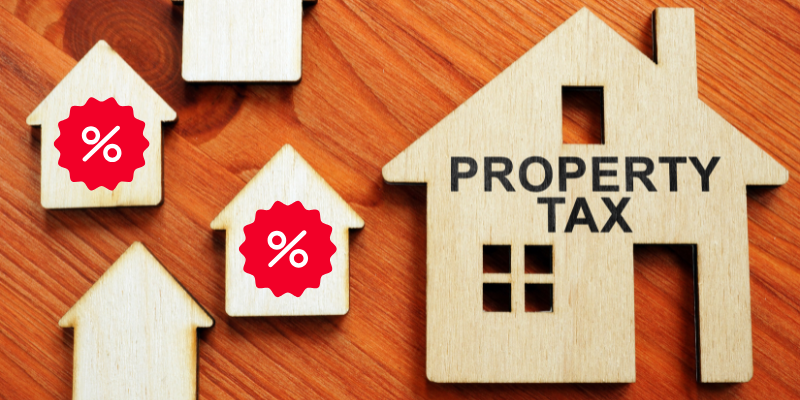
Thinking about buying a home in Philadelphia, PA? One of the biggest things to keep in mind that people often overlook is property taxes. Every homeowner has to pay them, and while the city’s rate is currently 1.3998%, the actual amount you pay can vary depending on your home’s assessed value and any exemptions or credits you qualify for.
The rate itself hasn’t changed since 2016, but Philadelphia recently completed a reassessment of property values, which affects what some homeowners owe. New homeowners should be aware of this update, as it could influence their first tax bill. While Philly’s taxes aren’t the lowest in the country, they are also far from the highest. Some areas in Illinois and other states have much steeper rates, for example.
Understanding the tax rate and how property is assessed can help you budget effectively and avoid a bill shock when your tax bill arrives. If rising taxes or unexpected reassessments become overwhelming, some homeowners consider selling to cash home buyers in Philadelphia and surrounding cities as a quick and convenient option.
Overview of the Tax Rate in Philadelphia, PA
- 2025 Real Estate Tax Rate: 1.3998%
- Due Date: March 31st each year
- Funds: Local schools, public safety, road maintenance, parks, and municipal services
- Exemptions: Check whether you qualify for a homestead exemption, which can lower your tax bill
Why Do We Pay Property Tax?
The expenses of owning a home don’t end with the down payment and your monthly mortgage. Beyond this and maintenance costs, you also have to account for ongoing taxes, with property taxes being one of the most important. While they might not be the most exciting part of owning a home, they play a big role in how your neighborhood looks and functions, which is probably part of what made you like the area in the first place.
Property taxes go directly back to the county and help fund essential services such as road improvements and repairs, park maintenance, public safety, local government operations, and, most significantly, your school district, which receives the largest portion of the revenue. These investments shape the quality of life in the community, influence property values, and support the services that families rely on every day.
In short, property taxes help maintain the infrastructure, public safety, and the amenities that make your area livable and attractive. They are an essential part of what turns a simple location into a place that you are proud to call home.
How Are Property Taxes In Philadelphia Calculated?
Philadelphia’s real estate tax rate of 1.3998% is made up of two main components: the school district at 0.7839% and the city at 0.6159%.
To calculate the proper tax you owe, simply multiply your property’s assessed value by the tax rate:
Assessed Value x 1.3998% = Tax Owed
The assessed value of your property is determined by the Office of Property Assessment (OPA). In some cases, you may not have to pay taxes on the full assessed value thanks to tax exemptions or credits. The good news is that the OPA will mail you an estimate of your property tax bill, including a breakdown of your property’s assessed value and its market value. Keep in mind, the assessed value is not the same as your home’s market value or the price you paid when you bought it.
To determine the assessed value, OPA considers factors such as
- size of your property
- location
- age and condition of the home
- recent sale price of similar properties in your neighborhood
If you think your property has been unfairly assessed or a mistake has been made, you can file an appeal to OPA. Take note, appeals must be submitted the year before the tax year you’re appealing for, usually starting in early October.
Property Tax Exemption and Relief In Philadelphia, PA
Property taxes can easily cost you a few thousand dollars a year, a significant expense. For example, if your home is assessed at around $230,000, your yearly bill will be roughly $3,300 before any exemptions. That’s a big chunk of money for most homeowners.
The good news is that Philadelphia offers several tax exemptions and relief programs that can significantly lower what you owe, depending on your situation. Whether you are a first-time homeowner, a long-time resident dealing with ever-increasing assessments, or someone living on a fixed income, there are programs designed to help make those annual taxes more manageable.
1. Homestead Exemption
One of the easiest and most helpful tax relief options for Philadelphia’s homeowners is the Homestead Exemption. The only requirement is that you own the home and live in it as your primary residence. The best part is that you only need to apply once. After you’re approved, the exemption automatically stays on your property every year unless your residency or ownership changes.
The Homestead Exemption lowers your tax bill by reducing your assessed value by $100,000. With Philadelphia’s tax rate, that amount can save the average homeowner around $1,400 a year, which makes a big difference when budgeting for annual property taxes.
Here are a few key things to know:
- Homes that are under a 10-year tax abatement cannot use the Homestead Exemption until the abatement ends.
- If you buy a home, you should submit a new application. The exemption does not transfer from the previous owner.
- If you move or start using the property as a rental, you’re required to let the city know, since the exemption only applies to properties that you personally occupy.
2. Longtime Owner Occupants Program (LOOP)
The Longtime Owner Occupants Program (LOOP) is designed to help long-term homeowners who have lived in their property for at least 10 years and are at risk of being priced out due to rapidly rising property values. As many neighborhoods experience fast changes in the real estate market, some owners see large jumps in their assessments. LOOP helps by capping how much your assessed value can increase, which keeps your property taxes more stable.
Depending on your situation, LOOP limits assessment increases to 50% or more in a single year, or 75% or more over five years.
This protects eligible homeowners from sudden steep increases that could make their taxes unaffordable.
To qualify, you must:
- Own and live in the property as your primary residence
- Have lived in the home for 10+ years
- Be current on your property taxes or in an approved payment agreement
- Meet the income limit set each year by the U.S. Department of Housing and Urban Development (HUD)
For reference, in 2025, the maximum household income to qualify is about $100,300 for a single-person household and $143,250 for a four-person household.
3. Senior/Low-Income Tax Freeze
The Senior/Low-Income Tax Freeze helps protect older adults and low-income homeowners by making sure they can afford to stay in their homes. Applications are typically due by September 30 each year. Once approved, the program “freezes” your property tax bill, meaning your taxes will not increase even if your property value rises or the tax rate changes. This keeps your yearly bills stable and predictable as long as you remain eligible.
Age Requirements:
- You must be 65 years old or older, or
- A surviving spouse, 50 years old or older, and meets certain eligibility conditions
Income Requirement:
- Household income must be $33,500 or less for a single homeowner
- Household income must be $41,500 or less for married homeowners
This program is especially valuable for seniors on fixed incomes or homeowners who may struggle with rising costs. Freezing the tax bill reduces the risk of falling behind or potentially losing the home due to increasing property taxes.
4. Owner-Occupied Payment Agreement (OOPA)
Sometimes, people can fall into hard times where bills pile up, or unexpected expenses make it hard to stay on track. That’s exactly where the Owner-Occupied Payment Agreement (OOPA) can help. This program is designed for homeowners who have fallen behind on their property taxes and need some help catching up.
OOPA allows eligible homeowners to enter into an income-based payment plan, breaking down what they owe into affordable monthly payments. The amount you pay each month depends on your household income and household size, which makes the plan realistic for people who are trying to recover financially. Another major benefit is that OOPA can reduce penalties and interest, helping keep the balance from growing as you’re paying it off.
To qualify for OOPA, you must:
- Own and live in the property that has the unpaid property taxes
- Provide proof of household income
- Stay current on all future property taxes while in the program
OOPA is one of the most flexible programs Philadelphia offers. As long as you stay on the payment plan, the city will not take legal action for tax collection, giving homeowners a second chance to get back on track without losing their homes.
5. New 2022 Property Tax Abatement
Philadelphia’s 10-year property tax abatement was originally created to encourage new construction by allowing homeowners to pay taxes only on the land value, without including the value of the newly built home. For years, buyers received the full benefit for all 10 years, which helped many save thousands of dollars.
In 2022, the city updated the program. Instead of giving the full abatement for the entire decade, the tax break now starts at 100% in the first year, which gradually decreases each year until it ends in year 10. So in the second year, you receive 90% of the benefit; the third year, 80%; and it continues to step down by 10% annually. By the 10th year, the abatement is reduced to 10%, and after that the property is fully taxable.
Even though it’s not as generous as the original version, the updated abatement still offers meaningful savings, especially in the early years of homeownership, and continues to support new development throughout the city.
To qualify for the updated abatement:
- The property must be newly constructed or undergo major improvements that significantly increase the value
- The owner must also apply for the abatement during the required time frame, typically before or as soon as construction is completed
How To Pay Your Property Taxes
Philadelphia has made paying property taxes straightforward and convenient. If you prefer to stay at home, you can pay online through the Philadelphia Tax Center or by calling their customer service.
If you’re pretty traditional, you can mail a check or money order to the city or even pay in person at the Tax Center.
However, if you have a mortgage, you may not need to take any extra steps. Most mortgage plans automatically include your property taxes in your monthly payments. Your lender collects the tax portion along with your mortgage and then pays the Philadelphia Tax Center on your behalf, so you don’t have to worry about sending a separate payment.
It’s always a good idea to confirm with your mortgage company that your taxes are being paid on time to avoid any late fees or penalties.
What Happens If You Miss a Payment On Your Property Taxes?
Property taxes in Philadelphia are due every year on March 31. If you miss a deadline, penalties begin to accumulate right away. Each month your payment is late, an additional 1.5% charge, called “additions,” is added to your bill, up to a maximum of 15%. So if you accidentally miss the deadline, it’s best to pay as soon as possible to prevent these charges from piling up.
If your property taxes remain unpaid into the next year, starting January 1, your taxes are officially considered delinquent. At that point, an additional 15% penalty is added to your unpaid balance, and the city may file a lien against your property. A lien gives the city a legal claim to your home until the debts are paid, which can lead to further fees and complications.
In the worst-case scenario, if the taxes still aren’t paid, the city can foreclose on the property and sell it at a sheriff’s sale.
If your financial situation becomes unmanageable, some homeowners explore selling to investor home buyers in Pennsylvania and nearby cities to avoid further penalties or the risk of foreclosure. They can often work with you to set up a payment plan and other relief options, which helps prevent penalties and keep your home safe from foreclosures.
Final Thoughts: Philadelphia, Pennsylvania Tax Rate
Owning a home in Philadelphia comes with many benefits, but it also means keeping up with the property taxes. Understanding how your taxes are calculated, staying on top of payment deadlines, and knowing that there are programs and options to reduce or manage your bill can make a big difference. Paying on time helps avoid penalties, liens, and other complications, while using available relief programs can make homeownership more affordable. By staying informed and proactive, you can enjoy the rewards of your home without letting property taxes become a burden.
Need To Sell Your Philadelphia Home?
At Nura Home Buyers, we buy properties as-is, giving homeowners a fast, simple, and stress-free sale. We purchase any type of property in any condition, from homes that need a lot of TLC to well-kept family houses, and we can close in as little as 7 days!
Our clients love that they do not have to do a thing. We handle everything, including cleaning and repairs. You simply sign the paperwork and receive your cash.
Get your no-obligation, fair, and competitive cash offer in the mail today.
Contact us at (610) 550-8365 or fill out the short form below to get started!